
Am I Actually Going Bald, or Just Shedding? The Difference, Explained
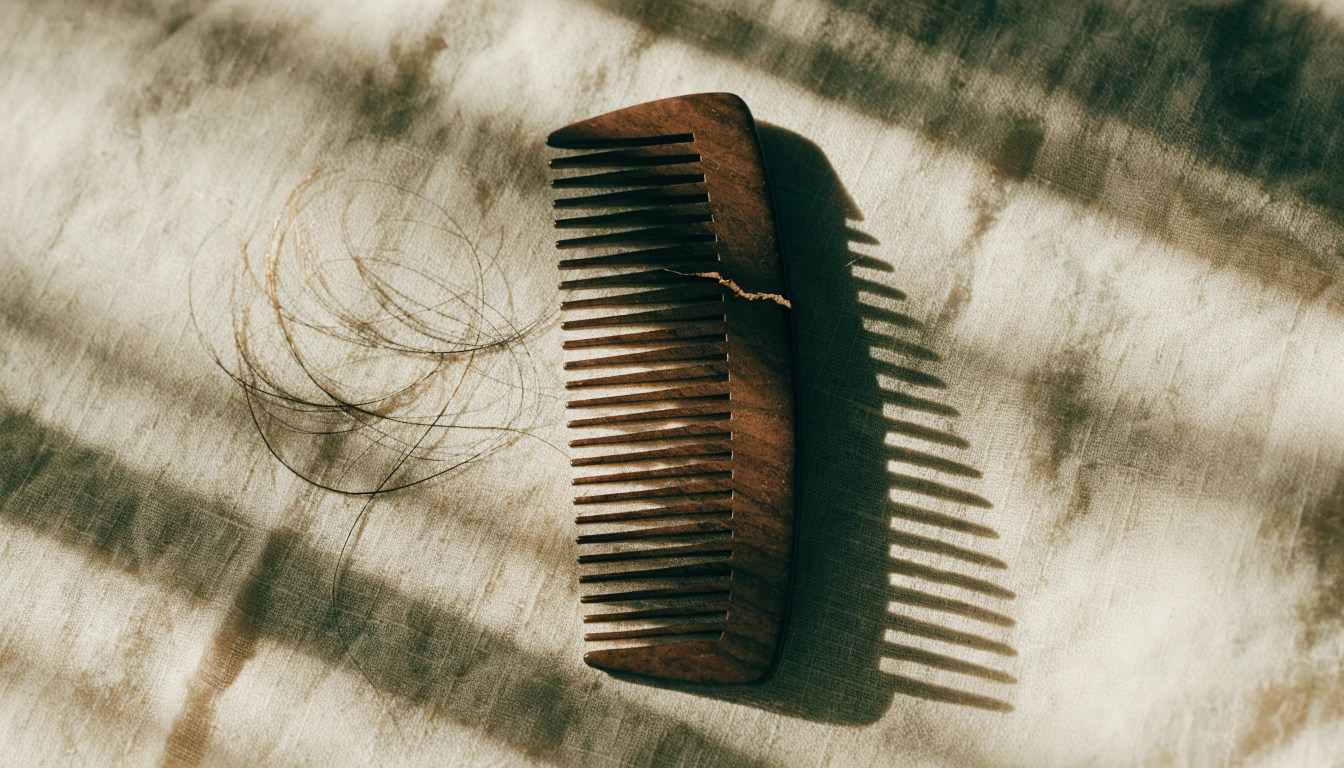
There's a particular kind of moment that brings most people to a hair clinic for the first time. It isn't dramatic. It's usually just a Tuesday, the shower drain, a photo someone else took, a part that looks a little wider than it used to. And then the question that follows almost everyone home from that moment: is this actually happening, or am I overreacting?
It's a fair question. Hair sheds. All hair, on every head, all the time. The trouble is that normal shedding and the early stages of genuine hair loss can look almost identical from the inside, which is exactly why so many people wait months, sometimes years, second guessing what they're seeing before they ask anyone who'd actually know.
So before anything else: here's how to tell the difference.
Some shedding is completely normal
Every hair on your head is on its own independent clock, cycling through three phases: a growth phase that lasts years, a short transition phase, and a resting phase that ends in the hair falling out to make room for a new one. At any given time, roughly 10% of your hair is in that resting phase. Losing somewhere between 50 and 100 hairs a day is simply that cycle doing its job.
This is why a hairbrush full of hair doesn't automatically mean anything is wrong. Stress, illness, a poor season of sleep, even a change in weather can temporarily push more hairs into the resting phase at once, a pattern called telogen effluvium. It looks alarming. It's also, in most cases, temporary, and hair density recovers on its own within several months once the underlying cause settles.
"The distinction that actually matters isn't 'am I losing hair', everyone is, constantly. It's 'is the hair coming back.'"
The signs that suggest something more permanent
Genetic hair loss, androgenetic alopecia, the cause behind the vast majority of male and female hair loss, doesn't announce itself with a dramatic event. It's slow, patterned, and progressive, which is exactly why it's so easy to miss in the mirror you look at every single day. A few things worth paying attention to:
- A changing hairline, not just a high one. Some hairlines have always sat higher or lower than others, that's just bone structure. What's worth noticing is movement: a hairline that's visibly further back than it was two years ago, particularly forming a more pronounced "M" shape at the temples.
- Thinning at the crown you can't see yourself. This is the one people miss longest, simply because it's the hardest part of your own head to inspect. A widening gap at the part line, or a patch at the crown that catches more light in photos than it used to, is often the first sign anyone else notices before you do.
- A part that's gradually getting wider. If old photos show a fine, narrow part and current ones show something noticeably broader, that's a density change, not a styling change.
- Individual hairs looking finer. Genetic hair loss doesn't just reduce the number of hairs, it miniaturises them, so hair that survives often grows back thinner, softer, and less pigmented with each cycle.
- A family history. Androgenetic alopecia is strongly hereditary, from both sides of the family, not just paternal. It doesn't guarantee anything, but it does mean the odds are worth taking seriously rather than dismissing.
None of these signs, on their own, are a diagnosis. Together, and especially alongside a family history, they're a reasonable signal that what you're noticing isn't just an unlucky week, it's a pattern worth understanding properly, while there's still the most to work with.
Why timing actually matters here
There's a version of this article that tells you not to worry, that it's probably nothing, that you should just wait and see. We're not going to write that one, mostly because it isn't true, and partly because "wait and see" is the single most common reason people arrive at a clinic with far fewer options than they would have had two years earlier.
Genetic hair loss is progressive. Left alone, it continues. That doesn't mean early thinning always has to end in a transplant. Plenty of early stage hair loss responds well to treatments like Restoration Therapy alone, without surgery ever being the right conversation. But that's a decision worth making with actual information, not a guess made alone in a bathroom mirror at 11pm.
Getting a real answer, instead of a guess
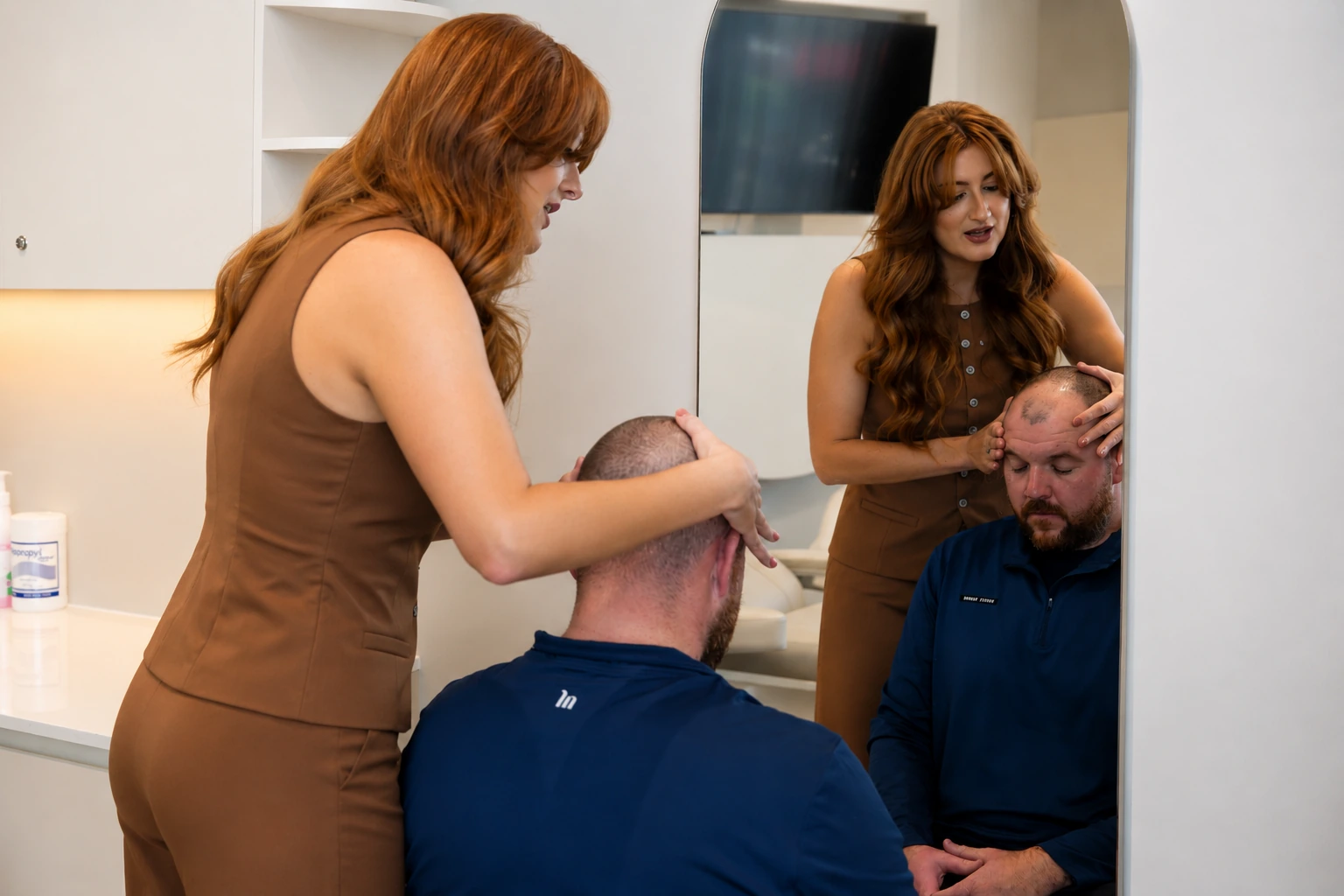
The honest truth is that no article, this one included, can tell you with certainty what's happening on your own scalp. Shedding patterns, hairline changes, and thinning can look similar for very different underlying reasons, and the only way to know for sure is to actually look properly, with the right tools and someone who does this every day.
That's the entire purpose behind a proper scalp analysis: not to sell you a procedure, but to give you a clear, honest picture of exactly where things stand, what's genetic, what's temporary, what stage it's at, and what your realistic options actually are. Sometimes that conversation ends in a plan. Sometimes it ends in genuine reassurance that there's nothing urgent happening at all. Both are a better place to stand than not knowing.
Ready for a proper look?
If any of this sounds familiar, a Bespoke Scalp Analysis at The Maison is the place to start. No assumptions, no pressure, just a clear, honest answer.
Book an Analysis →